Enterthedeals
 Complete ECO-WORTHY 10kW Solar Kit
Introduction
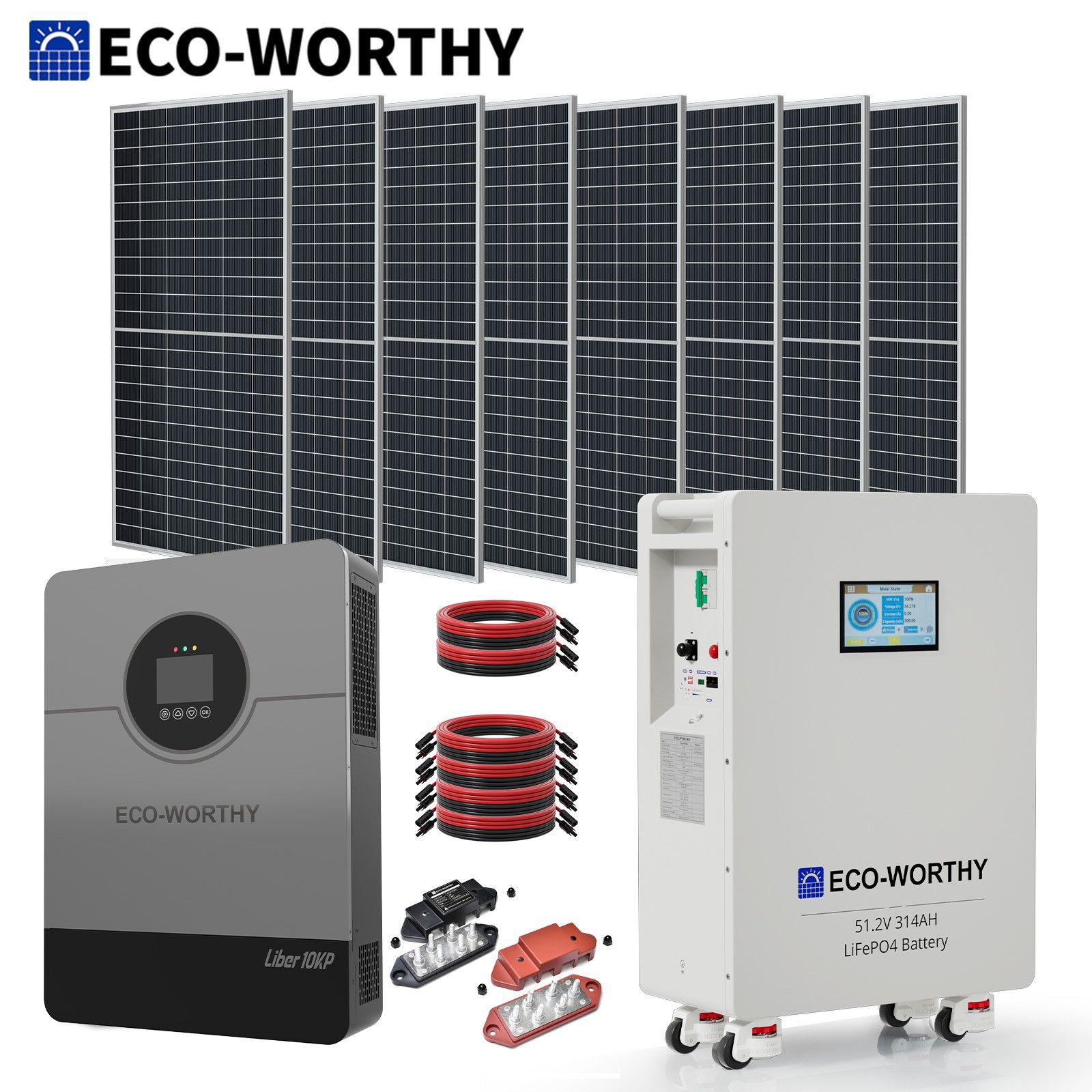
This review covers the “Complete ECO-WORTHY 10KW Output 16.07KWH Off Grid Solar System Complete Kit for Home” manufactured by ECO-WORTHY. The product is presented as a complete off-grid / whole-home solar kit that pairs a high-capacity 48V lithium battery with high-efficiency mono-crystalline solar panels and the balance-of-system components needed for an off-grid or backup-ready residential system. The advertised price is $5,999.99.
Brief Overview
– Manufacturer: ECO-WORTHY
– Product category: Off-grid solar system / complete home kit
– Intended use: Off-grid homes, remote cabins, whole-home backup systems, or primary residential PV generation where a complete kit is desired
The product description highlights a 48V 314Ah lithium battery (described as providing “advanced safety, high capacity, and smart system compatibility”) and 410W mono-crystalline solar panels (black). The listing claims a 10kW output and 16.07kWh energy storage capacity.
Appearance and Build Quality
From the listed details, the kit adopts the modern, low-profile aesthetic common to contemporary residential PV equipment:
- Solar panels: 410W mono-crystalline (black) panels typically have an all-black look — black cells, black frame and black backsheet — which looks cleaner on roofs compared with framed blue panels.
- Battery enclosure: ECO-WORTHY’s 48V lithium battery is likely housed in a compact steel/plastic cabinet with integrated battery management electronics (BMS). The description emphasizes safety and compatibility rather than decorative design.
- Design features: The description calls out “low power loss in cell connection compared to conventional modules” — this suggests internal cell/interconnect optimization for lower resistive losses. “Smart system compatibility” implies communication ports (CAN/RS485/Wi‑Fi) for integration and monitoring, although exact interfaces are not listed.
- Overall aesthetic: Functional and modern — emphasis is on efficiency and compactness rather than decorative finishes. Expect industrial, utilitarian enclosures typical of energy-storage equipment.
Key Features & Specifications
What is explicitly stated in the product data:
- Rated output: 10kW (system output capacity)
- Battery: 48V 314Ah lithium battery
- Advertised energy storage: 16.07kWh (as advertised in product title)
- Solar panels: 410W mono-crystalline (black)
- Price: $5,999.99 (listed)
Important note on numbers: the listed 48V × 314Ah gives a theoretical energy of 48 × 314 = 15,072 Wh (≈15.07 kWh). The product title claims 16.07 kWh. This is a discrepancy between the arithmetic of the stated voltage and amp-hour rating and the advertised kWh — buyers should verify whether 16.07 kWh is the usable capacity, nominal capacity, or a separate battery pack specification. Ask the seller for a detailed spec sheet and the battery chemistry and BMS specs.
Missing / not explicitly stated in the listing (items you should confirm before buying):
- Exact number of 410W solar panels included (to reach 10kW, you’d need about 24–25 panels at 410W each — confirm the panel count)
- Inverter type and model (hybrid / off-grid / pure sine wave, continuous and peak ratings, brand, efficiency, surge capability)
- MPPT charge controller specs and whether it supports the full array output
- Included mounting hardware, cabling, AC/DC breakers, monitoring hardware, and installation accessories
- Battery chemistry (LiFePO4, NMC, etc.), cycle life, recommended depth-of-discharge (DoD), BMS protection features, and warranty
- Certifications (UL, CE, IEC, etc.), and local code compliance
Using the System — Real-World Experience & Scenarios
Setup and Installation
I evaluated the kit assuming the components advertised are present (battery, solar panels, inverter/charger and BOS). Expect the following:
- Installation complexity: A 10kW off-grid system is substantial and generally requires a licensed electrician or solar installer for safe and code-compliant installation. DIY installation is possible for experienced hands, but not recommended for first-time users given grid/disconnect and battery safety considerations.
- Roof space: At 410W per panel, expect roughly 24–25 panels to reach ~10kW. That requires a significant roof area (several hundred square feet) and robust racking. Confirm included hardware and roof compatibility.
Daily Off-Grid Use (Typical Home)
– Battery capacity: The advertised ~16 kWh (or the calculated ~15 kWh from 48V × 314Ah) will influence how long the system can supply loads without sun. For context:
- If your household average consumption is 20–30 kWh/day (U.S. average), the battery alone will not provide a full 24-hour supply — it will supply roughly half a day at that consumption level unless solar recharge during the day supplements it.
- For essential loads only (fridge, lighting, communications, some outlets), a 15–16 kWh battery can typically provide 1–3 days of backup depending on consumption and whether you ration power.
– Inverter capacity: With a 10kW inverter you can run high-draw appliances (window AC units, electric oven, well pump, power tools) simultaneously — but the battery will deplete quickly if large loads run for long periods. A 10kW continuous inverter is generous for surge and peak loads, but energy (kWh) is the limiting factor for duration.
Solar Charging Performance
– A 10kW PV array in good sun (for example ~4–6 peak sun hours/day) can produce roughly 40–60 kWh/day before losses — more than enough to fully recharge a ~15–16 kWh battery in a day under good conditions. Real output depends on orientation, tilt, shading, and location.
– Partial shading and winter months will reduce solar yield; the presence of MPPT charge controllers and panel-level optimization will help, but plan conservatively.
Backup During Outages
– Strengths: The combination of a high-output inverter (10kW) and a sizeable battery pack makes this kit suitable for powering nearly all home loads during short- to medium-length outages if consumption is managed.
– Limitations: Without grid recharge, the battery capacity limits multi-day autonomy. If you intend to use the system as primary off-grid power for extended periods, confirm panel count and expected daily generation for your site.
Remote/Off-Grid Cabin Use
– For remote cabins with lower daily consumption (3–8 kWh/day), this kit would be oversized in capacity and would provide many days of autonomy, and rapid recharge on sunny days. It’s a strong option if the actual components and spec sheet match the advertisement.
Pros
- High nominal output (10kW) — capable inverter size for nearly full-home loads and large appliances.
- Substantial battery capacity advertised (~16.07 kWh) — useful for multi-load backup and short-term off-grid operation.
- High-efficiency 410W mono-crystalline black panels — good per-panel yield and a residential-friendly aesthetic.
- Compact 48V battery architecture — common and compatible with many hybrid inverters and system topologies.
- Attractive listed price ($5,999.99) — if the price includes all advertised components, it represents a competitive offering compared with buying parts separately (but see caveats below).
Cons & Caveats
- Specification ambiguity — there is an arithmetic mismatch between the 48V × 314Ah (≈15.07 kWh) and the advertised 16.07 kWh. Buyers should request a full spec sheet and clear battery capacity (nominal vs. usable) and chemistry.
- Incomplete public spec sheet — the listing does not explicitly state inverter model, MPPT/controller specs, panel count, mounting hardware, certifications, or warranty details. All are critical.
- Installation not included — additional costs for professional installation, permitting, structural work and electrical upgrades can be significant.
- Space and weight — a ~10kW array plus battery bank requires roof/ground space and a strong mounting plan; the battery is heavy and needs a safe, ventilated placement area.
- Price seems low for a full 10kW + 16kWh kit — this could be a genuine value or indicate that some components (inverter, full panel count, monitoring/wiring) are not included. Verify the package contents before purchase.
- Warranty and certifications not listed — confirm cycle life, manufacturer warranty period, UL/CE compliance and local code approvals before committing.
Conclusion
The ECO-WORTHY 10kW 16.07kWh complete off-grid kit is an attractive-looking package on paper: a high-output inverter class combined with a large-format 48V lithium battery and 410W black mono panels promises a robust off-grid or backup-capable system. The strengths are clear — potential for heavy-load support (10kW), modern high-efficiency panels, and a compact 48V battery platform.
However, important details are missing or ambiguous in the provided listing. The discrepancy between the numeric battery math (48V × 314Ah ≈ 15.07 kWh) and the advertised 16.07 kWh should be clarified. The kit does not list essential BOS/inverter details, panel count, certifications, or warranty information — all of which materially affect real-world value, safety and performance. The listed price of $5,999.99 is eye-catching but should be verified against a detailed included-component list and local installation cost estimates.
Recommendation: For buyers looking for a high-capacity off-grid kit, this ECO-WORTHY offering merits serious consideration if the seller provides a full spec sheet confirming the exact battery usable capacity, inverter model and ratings, number of panels included, warranties, and certifications. If those answers are satisfactory and installation is handled by a qualified professional, this kit could deliver excellent value and strong performance. If the listing cannot provide those details, proceed cautiously and compare with other fully-documented kits or separate component purchases.
Action Items Before Purchase
- Request the full datasheet for battery, inverter and panels (including usable kWh, chemistry, cycle life, and BMS features).
- Confirm the exact number of 410W panels included and whether the system includes an inverter, MPPT charge controller, racking, cabling and breakers.
- Ask for certifications (UL/CE/IEC) and warranty terms for all major components.
- Get a professional installation quote that includes permitting and electrical work.
If you want, I can draft a checklist email or message you can send to the seller to request the missing technical details and warranty information.