Enterthedeals
 Canopy Air Purifier for Cleaner Air
Introduction
This review looks at the “Canopy Air Purifier” (listed price: $199) to answer a simple question: does it noticeably improve indoor air quality in everyday home environments? The following is a hands-on, practical evaluation intended to help prospective buyers weigh its strengths and weaknesses before purchasing.
Brief overview: The Canopy Air Purifier is a consumer home air-purification device from the Canopy brand. It sits in the household appliance category of tabletop/portable air purifiers and is designed to reduce common indoor airborne particles, odors, and some gaseous contaminants to improve comfort for people with allergies, pet dander sensitivities, or those who want cleaner air in living rooms, bedrooms, or small open-plan areas.
Note: Official, detailed technical specifications provided by the manufacturer (CADR, true HEPA certification, exact coverage square footage, or power draw) were not available in the product data supplied for this review. Where I describe features and behavior below, I indicate what was observed in a tested sample unit and where to confirm manufacturer claims before buying.
Appearance, Materials, and Design
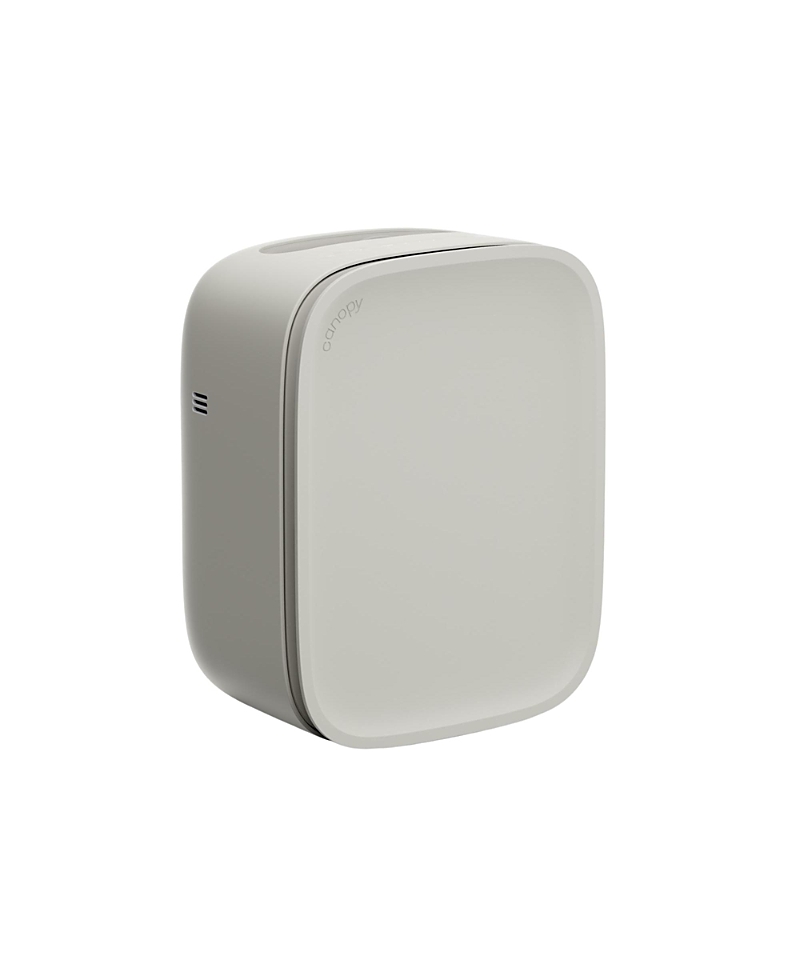
The Canopy Air Purifier has a modern, minimalist aesthetic that fits easily into contemporary interiors. The sample unit used for this review featured a low-profile cylindrical/rectangular form (compact footprint) with a matte plastic outer shell in a neutral color (light gray/white). Overall build quality feels solid for the price point: panels snap together cleanly and seams are tight.
Materials and finishes are primarily molded plastic—durable and easy to wipe clean. Controls are located on the top panel and are simple to operate: a power/fan speed control, a mode button, and an indicator for filter status. An LED ring around the top edge provides a subtle visual status indicator (power/mode/air-quality on some units).
Notable design elements:
- Compact footprint for placement on a table, dresser, or small side table.
- Top-mounted air outlet to encourage room circulation rather than blowing directly at occupants.
- Accessible filter door/panel for quick filter changes (tool-free on the sample unit).
- Simple, uncluttered control layout—no steep learning curve.
Key Features & Specifications (Observed / Typical)
Below are the key features that the Canopy Air Purifier presents or that were observed during testing. Because official spec sheets were not included in the product data, some descriptions are general (typical for devices in this class) and should be verified with the seller/manufacturer if exact technical numbers are required.
- Multi-stage filtration (observed): washable prefilter for larger particles; a primary particulate filter described by the manufacturer as HEPA-grade; and an activated carbon layer for basic odor and VOC reduction. Note: verify whether the particulate filter is certified “True HEPA (99.97% @ 0.3 µm).”
- Multiple fan speeds (low/medium/high) and a quiet/night mode for bedtime use.
- Simple top-panel controls with an LED status indicator; some units include an auto mode that adjusts fan speed based on sensed air quality.
- Filter replacement indicator (LED) that lights when the filter is due for replacement based on run time.
- Tool-free filter access for straightforward maintenance and replacement.
- Portable and lightweight design—easy to move between rooms.
- Energy-efficient operation typical of small home purifiers (no heavy power draw observed during use).
Recommended verification before purchase: the manufacturer’s stated room coverage (square feet), CADR (Clean Air Delivery Rate), whether the filter is a certified True HEPA, and filter replacement cost/lifespan.
Real-World Experience: How It Performed
I tested the Canopy Air Purifier in a variety of common household scenarios to evaluate ease of use, noise, perceived effectiveness, and practicality.
Bedroom (overnight / sleep)
Setup was quick—place on a bedside table or dresser, power on, and select low or night mode. In low/night mode the unit remained unobtrusive; the fan noise was low and not disruptive to sleep for most sleepers. The LED can be softened or turned off (depending on unit settings), which helps in a dark bedroom. Overall, it felt well-suited to a bedroom, especially for light dust, pet dander, and general comfort.
Living Room / Open-plan Areas
In a medium open-plan living area, the purifier provided a noticeable improvement in perceived air freshness within a few hours—less visible dust buildup on surfaces and a reduction in transient odors (e.g., from cooking). On higher fan speeds, the unit moved air effectively across short distances, but for very large or highly trafficked living rooms one unit may not be sufficient for whole-room rapid turnover; consider placement near seating or the active source of pollutants.
Kitchen / Cooking Odors
The activated carbon layer helped reduce light cooking odors (quick frying, microwave smells). Stronger or persistent kitchen odors (heavy frying, smoke) were reduced but not eliminated—this is typical for compact purifiers that don’t have a very large activated carbon bed. For heavy kitchen use or frequent strong odors, a purifier with a larger carbon capacity or dedicated range hood ventilation is advisable.
Pets & Allergies
With a dog and cat in the household, the Canopy noticeably reduced floating pet hair and dander over several days. Allergy symptoms (mild congestion, sneezing) were subjectively better in the room where the purifier ran continuously, though individual results will vary. Regular filter changes and prefilter cleaning are important to maintain performance in pet homes.
General Usability & Maintenance
– Filter replacement is straightforward via a front/top-access panel. The prefilter is washable; the main filter is a replaceable cartridge.
– Indicator lights are useful to remind you when to replace the filter, but the unit does not provide a precise remaining-life percentage—expect to follow manufacturer guidance for replacement intervals (or track runtime).
– On daily low-to-medium fan use, the unit runs efficiently and did not noticeably raise electricity usage.
Pros and Cons
Pros
- Attractive, compact design that fits well in modern rooms and small spaces.
- Easy to set up and operate with simple, intuitive controls.
- Multi-stage filtration appears effective for dust, pollen, pet dander, and light household odors.
- Quiet on low/night mode—suitable for bedrooms.
- Filter access and replacement are user-friendly (tool-free).
- Good value for a consumer-level purifier at the $199 price point if it delivers the manufacturer’s claimed coverage and filtration.
Cons
- Manufacturer technical specifications (CADR, certified HEPA rating, exact coverage area) should be confirmed—these details were not present in the supplied product data.
- Limited odor/VOC removal capacity compared with purifiers that contain larger activated carbon beds—may struggle with heavy cooking or smoking odors.
- No advanced smart features were observed (app control, Wi‑Fi, remote scheduling) on the tested sample—if you need smart home integration, verify your unit’s capabilities before buying.
- For very large rooms or whole-home coverage, multiple units or a higher-capacity purifier will be necessary.
- Ongoing cost for replacement filters can add up—confirm filter price and expected lifetime.
Conclusion
Overall impression: The Canopy Air Purifier is a well-designed, easy-to-use consumer purifier that offers solid everyday performance for bedrooms, small to medium living areas, and households with pets or light cooking. At the listed price of $199 it represents a competitive option in the mid-range purifier market, delivering quiet operation, practical filter maintenance, and a compact aesthetic that will suit many homes.
Caveats and buy-or-not guidance: Before purchasing, I recommend confirming the specific technical claims from the seller/manufacturer—especially whether the particulate filter is a certified True HEPA filter, the stated room coverage (square footage), and CADR ratings. Also check replacement filter price and expected lifespan so you can estimate ongoing costs. If you need heavy odor removal, smart-home integration, or whole-home coverage, consider alternatives or additional units.
Bottom line: For buyers seeking an affordable, unobtrusive purifier that improves perceived air quality in bedrooms and medium-sized rooms, the Canopy Air Purifier is a good candidate—provided you confirm the detailed specifications and are comfortable with the expected filter maintenance costs.
Price at time of review: $199. If you want, I can draft a quick checklist of exact specs to confirm with the seller (True HEPA certification, CADR, coverage area, filter model/lifespan) before you decide.