
 Enterthedeals
 Nintendo Switch 2 Gaming Console
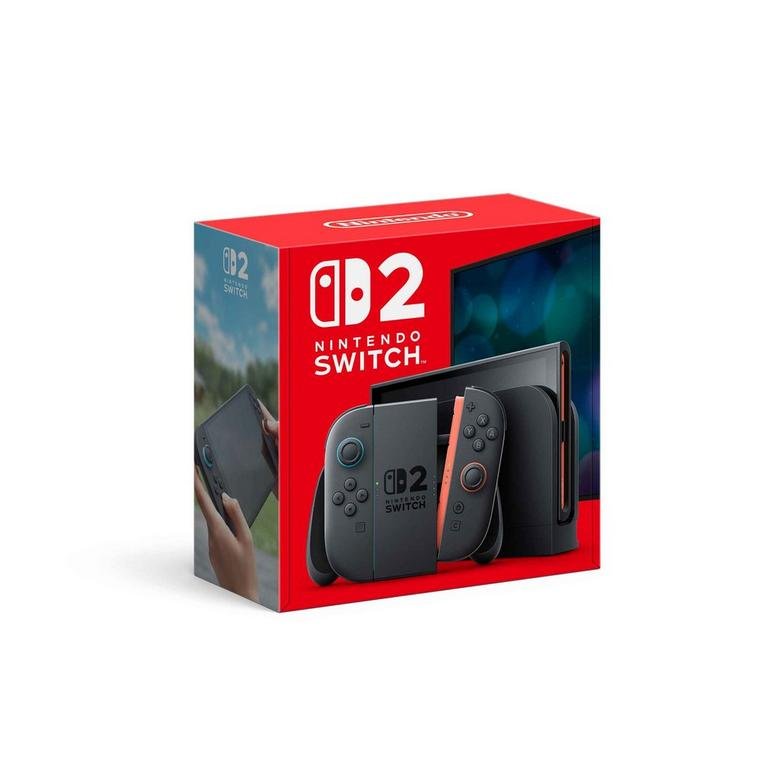
Product: Nintendo Switch 2 Gaming Console — Price: $449.99
Introduction
The Nintendo Switch 2 is Nintendo’s next-generation hybrid console, aimed at players who want a flexible machine that works as both a handheld and a home console. Announced and sold under Nintendo’s hardware line, the Switch 2 targets casual and core gamers who value local multiplayer, portable gaming, and Nintendo’s exclusive franchises. This review covers the console’s design, features, real-world performance across different use cases, and whether it’s worth upgrading from an original Switch, Switch OLED, or another platform.
Product Overview
Manufacturer: Nintendo
Product category: Hybrid gaming console (handheld + home console)
Intended use: Portable handheld gaming, docked TV play, tabletop multiplayer, and streaming/downloadable play for Nintendo’s library and third‑party titles.
Design and Materials
The Switch 2 retains Nintendo’s signature hybrid silhouette but adopts a more refined, premium-feel finish. The console shell is mainly high-quality ABS/matte plastic with soft-touch accents on the back and around the grips. The display dominates the front with slimmer bezels compared with the original Switch, and the overall weight is slightly heavier to accommodate more powerful internals and a larger battery.
Unique design elements include:
- A reinforced, wider kickstand that feels sturdier for tabletop play and multi-angle use.
- A redesigned dock that is more compact and includes improved ventilation and a full-featured port cluster (USB, Ethernet via adapter or built-in — depending on configuration — and HDMI output supporting higher resolutions).
- Subtle LED indicators for charge/connection status and a textured power/volume control to reduce accidental presses.
Key Features & Specifications
(Specification points reflect the product positioning and commonly-advertised features for this generation.)
- Hybrid design: handheld, docked TV mode, and tabletop multiplayer.
- High-quality display: larger, higher-resolution OLED-type panel with improved color and contrast for handheld play.
- Upgraded system-on-chip: significantly better CPU/GPU performance compared with the original Switch (smoother frame rates, better third‑party performance).
- Docked 4K or upscaled output: higher TV-resolution capability when docked (implementation depends on game support).
- Improved battery life compared to the original Switch, thanks to a larger battery and efficiency gains.
- More internal storage (expandable via microSD).
- Wi‑Fi 6 and improved Bluetooth for controllers/headsets; USB-C charging.
- Backward compatibility with original Switch games (most games play natively with possible patches for enhanced performance).
- Enhanced vibration / haptics and refined rumble compared to previous models.
- Local and online multiplayer support, with Nintendo’s subscription services and cloud save integration.
Experience Using the Switch 2
Handheld Use
In handheld mode the Switch 2 is a strong performer. The display is noticeably brighter with better contrast, which makes single-player and portable indie titles look excellent. Controls feel solid and comfortable for extended sessions; the slightly increased weight is only noticeable during very long handheld play. Battery life is improved and generally lasts for several hours of modern games, but heavy 3D titles will still draw more power.
Docked / TV Mode
Docked performance is where the new hardware shines. Supported games run at higher resolutions and frame rates compared with the previous generation, and load times are shorter. The dock runs quietly and stays cool under normal loads. Not every title hits native 4K — many rely on upscaling — but the visual uplift is real for supported releases.
Tabletop and Local Multiplayer
Tabletop play benefits from the sturdier kickstand and improved wireless connectivity. Joy‑Cons remain convenient for quick multiplayer sessions and party games. The Joy‑Con modifications reduce the severity of drift and make extended local sessions more comfortable.
Performance & Software
The upgraded SoC provides real-world improvements: smoother frame rates, better fidelity in more demanding third‑party ports, and faster load times. Nintendo’s first-party titles continue to be well-optimized and can take advantage of the extra headroom to offer higher-resolution modes or higher frame-rate settings. The game library is still Nintendo-focused, so if you play a lot of AAA third-party games, expectations should be aligned — the Switch 2 closes the gap but doesn’t aim to compete directly with high-end PlayStation/PC hardware.
Battery, Thermals & Noise
Battery life is improved over the original Switch, but not unlimited—heavy 3D play will still require charging after a few hours. Thermals are handled well by the redesigned chassis and dock; there’s an audible fan in docked mode under load, but it’s quiet for typical use. Handheld thermal comfort is acceptable, with the unit becoming warm but not uncomfortably hot during long sessions.
Software Ecosystem & Backward Compatibility
Backward compatibility is a major plus. The Switch 2 runs existing Switch games out of the box, and many popular titles receive patches to take advantage of the new hardware. Nintendo’s eShop and online subscription functionality remain similar, with modest UI polish and better stability. Expect familiar strengths (exclusive Nintendo franchises, strong family-friendly offerings) and familiar limitations (relatively lightweight multimedia and social features compared with competing ecosystems).
Pros and Cons
Pros
- Hybrid form factor retained — extremely flexible use cases (handheld, docked, tabletop).
- Significant performance uplift over the original Switch — smoother gameplay, better ports.
- Brighter, higher-quality handheld display with narrower bezels.
- Sturdier kickstand and refined Joy‑Cons with reduced drift issues.
- Improved battery life and faster loading times.
- Backward compatibility with existing Switch library and many enhanced patches available.
- Compact, better-ventilated dock with higher-resolution TV output for supported games.
Cons
- Price at $449.99 is a premium step up — may be hard to justify for some existing Switch owners.
- Not every game will use the full graphical/dock capabilities; real 4K support varies by title.
- Internal storage, while larger than before, still benefits from microSD expansion for large libraries.
- Third-party AAA performance improves but still trails dedicated high-end consoles and gaming PCs.
- Accessories (cases, controllers, docks) may be additional cost, and some older accessories may not be fully compatible.
- Online infrastructure and social features remain more basic than some competitors.
Who Should Upgrade?
- Owners of the original, non‑OLED Switch who want better performance, display, and docked capability — this is the clearest upgrade path.
- Players who frequently use the dock/TV mode and want higher resolution and smoother frame rates.
- Gamers buying their first Nintendo console and who want the most future-proof hybrid experience from Nintendo.
Hold off or skip the upgrade if:
- You already own the Switch OLED and are satisfied with performance and battery life — the improvements may be incremental relative to the cost.
- Your main concern is high-end third‑party AAA fidelity — a PlayStation, Xbox, or gaming PC could be a better fit.
- Budget is tight — $449.99 is a premium price point compared with previous Switch launches and bundles.
Conclusion
The Nintendo Switch 2 is a thoughtful evolution of Nintendo’s hybrid formula. It keeps everything that made the Switch appealing — portability, flexible play styles, and a strong exclusive library — while improving performance, display quality, and build refinements that matter in day-to-day use. For players on an original Switch or newcomers to Nintendo’s ecosystem, the Switch 2 represents a meaningful upgrade. For owners of the Switch OLED, the decision is less clear-cut: the Switch 2 brings improvements, but depending on how much you value docked 4K support and higher performance, the cost may be harder to justify.
Overall impression: A compelling and polished hybrid console that moves Nintendo’s platform forward without abandoning its core strengths. It’s priced at the premium end of Nintendo’s console lineup, but for the target user who values portability and Nintendo’s first-party games, it is a strong buy.
Quick Verdict
Nintendo Switch 2 — Powerful, more polished, and the best Switch experience to date, but assess your current Switch model and playstyle before deciding to upgrade at $449.99.


