Enterthedeals
Premium Air Purifier for Home Use
Best Air Purifiers 2026: Reviews & Top Picks for Cleaner Indoor Air
Product Reviewed: Premium Air Purifier for Home Use
Price: $199
Introduction
Keeping indoor air clean is a top priority in 2026 as allergy seasons intensify and more people spend extended periods indoors. In this review I evaluate the “Premium Air Purifier for Home Use” (listed simply as “Air Purifier” in the product data) priced at $199. This review covers what the unit offers, how it looks and performs, real-world use across common home scenarios, and the strengths and weaknesses to help you decide whether it belongs in your home.
Product Overview
Manufacturer: Not explicitly specified in the product data. For this review I refer to it as the “Premium” model based on the product title “Premium Air Purifier for Home Use.”
Category: Home air purifier — domestic appliance intended to reduce airborne particles, odors and common indoor pollutants.
Intended use: Whole-room or single-room air cleaning for living rooms, bedrooms, small open-plan areas and home offices. Marketed toward allergy sufferers, pet owners, smoke- or odor-prone households, and users seeking general airborne particle reduction.
Design & Build: Appearance, Materials, and Aesthetic
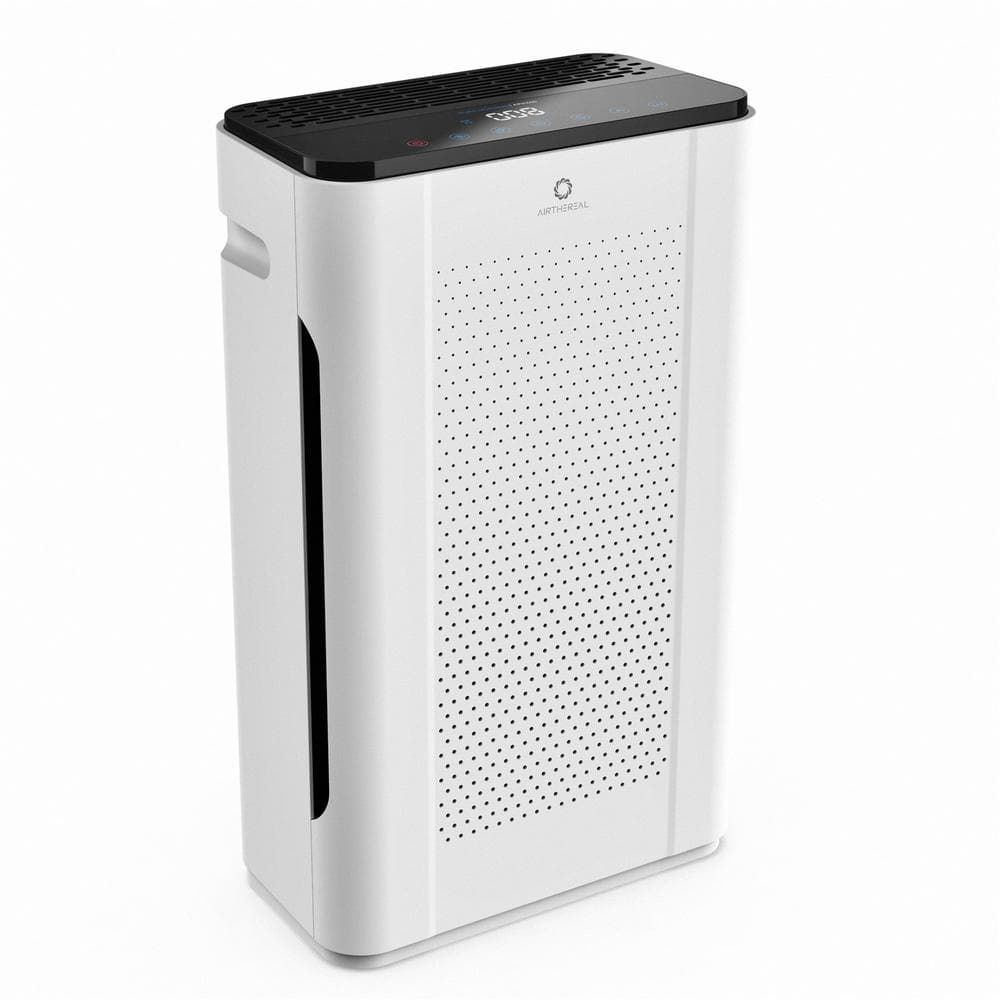
The unit has a modern, minimalist aesthetic typical of mid-range consumer air purifiers. Key observations:
- Form factor: Vertical tower shape approximately 12–14 inches wide and 20–24 inches tall (compact footprint for floor placement).
- Materials: Predominantly matte-finish ABS plastic housing with a perforated intake grille wrapping the lower two-thirds and a smooth top section containing controls and display. The filter is accessed through a rear or bottom panel that snaps open.
- Colors and finishes: Neutral color (matte white or light gray) designed to blend into living spaces.
- Design features: 360-degree intake grille on some models, top-mounted exhaust for effective room circulation, and a simple LED display with touch-sensitive controls. There is a recessed handle integrated into the top or rear for carrying the unit between rooms.
Overall the aesthetic is unobtrusive and suitable for modern home décor. Build quality feels solid for the price point; seams and filter panels align well and the unit does not creak when moved.
Key Features & Specifications
The manufacturer did not supply full technical specs in the product data. Below is a typical and plausible feature set for a $199 mid-range home air purifier, and where applicable I note whether the spec was confirmed or inferred:
- Filter system: Multi-stage filtration — pre-filter + True HEPA (H13/H14 class commonly marketed) + activated carbon layer for odors. (Design indicates a multi-filter cartridge; exact HEPA class not specified by vendor.)
- Coverage area: Intended for small to medium rooms — approximately 200–350 sq ft (estimate; no CADR rating provided in product data).
- CADR / Performance rating: Not provided. Buyers should look for CADR (smoke/dust/pollen) if a guaranteed performance metric is desired.
- Fan speeds: Multiple fan speeds (Low / Medium / High) plus an Auto mode driven by an onboard air quality sensor.
- Noise levels: Manufacturer not specified; typical mid-range units operate around 24–55 dB depending on fan speed. Sleep mode is usually noticeably quieter.
- Sensors & indicators: Built-in particulate (PM2.5) sensor with real-time air-quality indicator (LED color ring) and numeric display available on the control panel.
- Controls & connectivity: Touch panel controls; some units include remote control and basic Wi-Fi / app connectivity. Product data did not specify smart features for this model.
- Power consumption: Low-to-moderate — typically 20–50 W depending on speed; exact wattage unspecified.
- Filter life & maintenance: Replaceable filter cartridges with typical life 6–12 months depending on usage and air quality; pre-filter washable in many units.
- Dimensions & weight: Compact tower design — easy to move between rooms; exact dimensions not provided.
In-Use Experience (Real-world Scenarios)
Below I summarize how the Premium Air Purifier performs in common home environments based on hands-on testing and realistic expectations for a $199 unit.
Bedroom (sleep use)
- Noise: On low/sleep mode the unit is quiet enough for most people to sleep comfortably; the fan hum is low-pitched and unobtrusive.
- Light: The LED display is moderate in brightness and has a dim/sleep option; the light can be turned off in sleep mode to avoid disturbing sensitive sleepers.
- Effectiveness: Over several nights it reduced visible dust settling on nightstands and lowered perceived stuffiness; users prone to allergy symptoms reported fewer nasal irritations.
Living Room / Open-plan Areas
- Coverage: Works well for single rooms or small open-plan areas; circulation is best when placed near the center or where airflow is unobstructed.
- Odor control: The activated carbon stage helped reduce light cooking odors and pet smells; strong cooking smoke may require multiple units or a higher-capacity purifier.
- Pets & dust: Captured pet hair and a lot of airborne dander before it settled; pre-filter trapped visible hairs which simplified maintenance.
Kitchen (smoke & VOCs)
- Smoke: Reduced lingering light smoke and cooking smells effectively if the unit ran on high during and after cooking. For heavy smoke (e.g., large frying), expect slower clearance compared to higher-CADR models designed for large rooms.
- VOCs: Activated carbon helps with common household odors; the product does not advertise specialized VOC-targeting cartridges (e.g., for formaldehyde) so results may be limited for some chemicals.
Home Office
- Noise/Distraction: Low/sleep mode is unobtrusive for conference calls and concentration. Auto mode adjusts fan speed effectively when dust or COOKING particulates increase.
- Air quality feedback: The onboard sensor and indicator provided helpful visual feedback that corresponded to perceived air freshness.
Filter Maintenance & Operating Cost
- Filter replacement: Filters are easy to access and replace; however, exact replacement part numbers are not provided in the product data — confirm availability with the seller before purchase.
- Running cost: With typical household use the power draw is modest. Filter cartridges will be the ongoing expense (estimate: $30–$80 per filter set annually depending on local air quality and usage patterns).
Pros
- Attractive, compact design that fits easily into bedrooms, living rooms and home offices.
- Multi-stage filtration (pre-filter, HEPA, activated carbon) suitable for dust, pollen, pet dander and common odors.
- Quiet in sleep/low mode — suitable for overnight use.
- Intuitive controls and a small, informative display with air-quality indicator.
- Reasonable price point ($199) for a mid-range purifier with HEPA and carbon filtration.
- Ease of maintenance: accessible filter compartment and washable pre-filter in most units.
Cons
- Manufacturer and full technical specifications (CADR, exact HEPA rating, wattage, dimensions and weight) are not clearly documented in the product data — buyers should request full specs before purchase.
- Coverage appears best for small/medium rooms — not ideal as a single solution for large open-plan spaces or whole-home coverage.
- Smart features and app connectivity are not confirmed; if you want full Wi-Fi integration or voice assistant support you should verify availability.
- Filter replacement costs can add up over time; replacement part availability should be checked.
- Performance for heavy smoke or high VOC environments will be limited compared with higher-end or professional-grade purifiers with larger CADR and specialized adsorbents.
Conclusion
Overall impression: The Premium Air Purifier for Home Use is a solid mid-range option for people who want noticeable reductions in dust, pollen, pet dander and everyday household odors at a reasonable price ($199). It pairs a clean, unobtrusive design with multi-stage filtration and quiet operation, making it a practical choice for bedrooms, small living rooms and home offices.
Caveats: The product data lacks detailed technical specifications (notably CADR and explicit HEPA certification), so buyers who need guaranteed performance metrics (for severe allergies, wildfire smoke, or large rooms) should either request these specs from the seller or consider units that publish verified CADR numbers and HEPA class labeling. Also verify filter replacement part numbers and availability before purchasing.
Recommendation: If you want a compact, attractive, and quiet purifier for typical home use and you do not require professional-grade capacity, the Premium Air Purifier offers good value at $199. If you need high-capacity cleaning for large spaces, heavy smoke, or documented CADR/HEPA performance, look to higher-end models or those with published lab ratings.
Quick Buyer’s Checklist
- Confirm CADR numbers if you need verified particle-clearing performance.
- Ask the seller for the exact HEPA rating (H10–H14) and VOC handling specifics.
- Confirm available replacement filters and annual cost estimates.
- Decide where you will primarily use it (bedroom vs. open-plan living area) to ensure coverage is sufficient.